
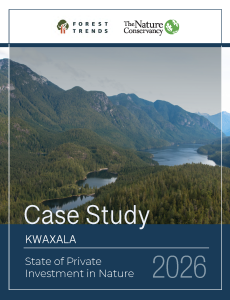
State of Private Investment in Nature 2026 Case Study: Kwaxala
Finance on Nature’s Terms: A New Investment Architecture for Indigenous-Stewarded Forests
View PublicationMost of the world’s most ecologically valuable forests are not held in private hands. In British Columbia, 94% of land is Crown land with underlying Indigenous rights to title over those lands, with the best forest held under Tree Farm Licenses issued to logging companies. These licenses are not only rights to extract timber; they have historically been legal obligations to do so.
Rather than attempting to outbid logging companies for land, or relying on philanthropy to offset extraction after the previous industrial holder of a Tree Farm License relinquished harvest rights, Kwaikah First Nation worked with the BC Ministry of Forests over three years to convert the logging obligation into a structure that supported their vision to protect and regenerate their territory, retiring the license’s extractive obligations. These regenerative rights are now held by the Nation, and generate an annual carbon offset revenue from a living forest.
The Nation has also founded Kwaxala, which has created a new form of pooled investment fund and securitized the annual revenue from the project into Living Forest Shares—perpetual investment units that investors hold in exchange for a share of ecological output. The Living Forest Share mechanism effectively converts relatively low acquisition cost per hectare Tree Farm Licenses and modest income streams from carbon credits into a balance sheet asset which the Kwiakah First Nation can leverage to fund ecosystem regeneration and community economic development.
####
This case study is an excerpt from the State of Private Investment in Nature 2026 report co-authored by Forest Trends’ Ecosystem Marketplace and The Nature Conservancy.